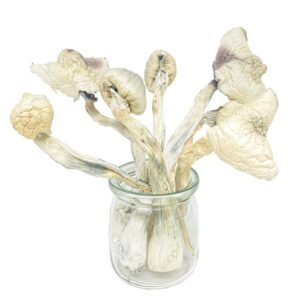

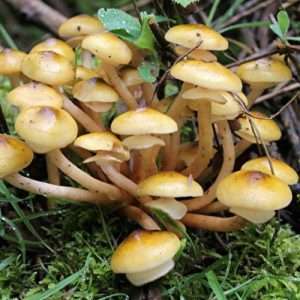
Armillaria Mellea: The Honey Mushroom: oz
250 $
A. mellea is a common fungus that produces edible fruiting bodies with a distinctive golden colour. A single example can grow to cover a vast area and it is reported that the largest living organism in the world is a related species of honey fungus covering an area of 2400 acres in Oregon, USA, with estimates of its age ranging from 1900 to 8650 years1.
Although responsible for the death of many trees and garden shrubs, A. mellea is essential for the growth of other plants, including the important Chinese herb Gastrodia elata (Tian Ma), which is used to treat conditions including vertigo, dizziness, headache, stroke and convulsions and whose medical properties A. mellea mirrors. Indeed A. mellea is considered the more potent of the two with an effective dosage half that of Tian Ma2,3.
Early reports indicated that A. mellea and G. elata shared the same active components but it is now known that they differ in their active metabolites. As well as being essential for the growth of G. elata, it has been shown that Armillaria species are involved in sclerotium formation in Polyporus umbellatus (see P. umbellatus section).
A. mellea mycelium contains high levels of polysaccharides with anti-ageing, immune-modulating and anti-vertigo activity4,5. In addition, nucleoside analogues play a role in some of A.mellea’s functions and a number of indole compounds have been isolated including tryptamine, L- tryptophan and serotonin, with A.mellea fruiting bodies containing 2.207mg serotonin per 100g dry weight6,7.
Several antibiotics, primarily sesquiterpene aryl esters, have been isolated from A. mellea and show strong action against gram-positive bacteria (Staphylococcus, Streptococcus, Enterococcus etc.), as well as yeasts and other fungi8-10.
NEUROLOGICAL – Tablets composed of A. mellea mycelium are prescribed in China for treating a variety of neurological conditions including Meniere’s Syndrome, vertigo,headache, insomnia, epilepsy, neurasthenia and hypertension2,3,11-14.
A. mellea fermentation extract showed anti-convulsant properties, raising the seizure threshold in PTZ-induced seizures in mice15, while an adenosine derivative from the mycelium abolished neurogenic twitch responses induced by electrical field stimulationwith both pre- and post-synapse depression, as well as being found to be 1,000 times stronger than adenosine in its cerebral protecting activity5. In addition A. mellea polysaccharide extract was shown to benefit vertigo induced by machinery rotation
Despite being utilized as a herbal medicine throughout Asia until recently, there was little scientific evidence to back up the usage of Armillaria mellea for medical purposes. It has become clear that popular wild mushrooms like Armillaria Mellea contain bioactive substances in their fruiting bodies, including polysaccharides, proteins, amino acids, fatty acids, vitamins, and minerals. Armillaria mellea benefits.
Related products
-
Flower
CBD Vape Starter Kit | Saber Battery + Cartridge Bundle
90 $ Select options This product has multiple variants. The options may be chosen on the product page